My latest morbid fascination has been finding content that I think shows the brutality of animal agriculture but that pro-dairy groups openly promote.
Take these cows from the the University of Wisconsin Madison’s Dairy Cattle Center.
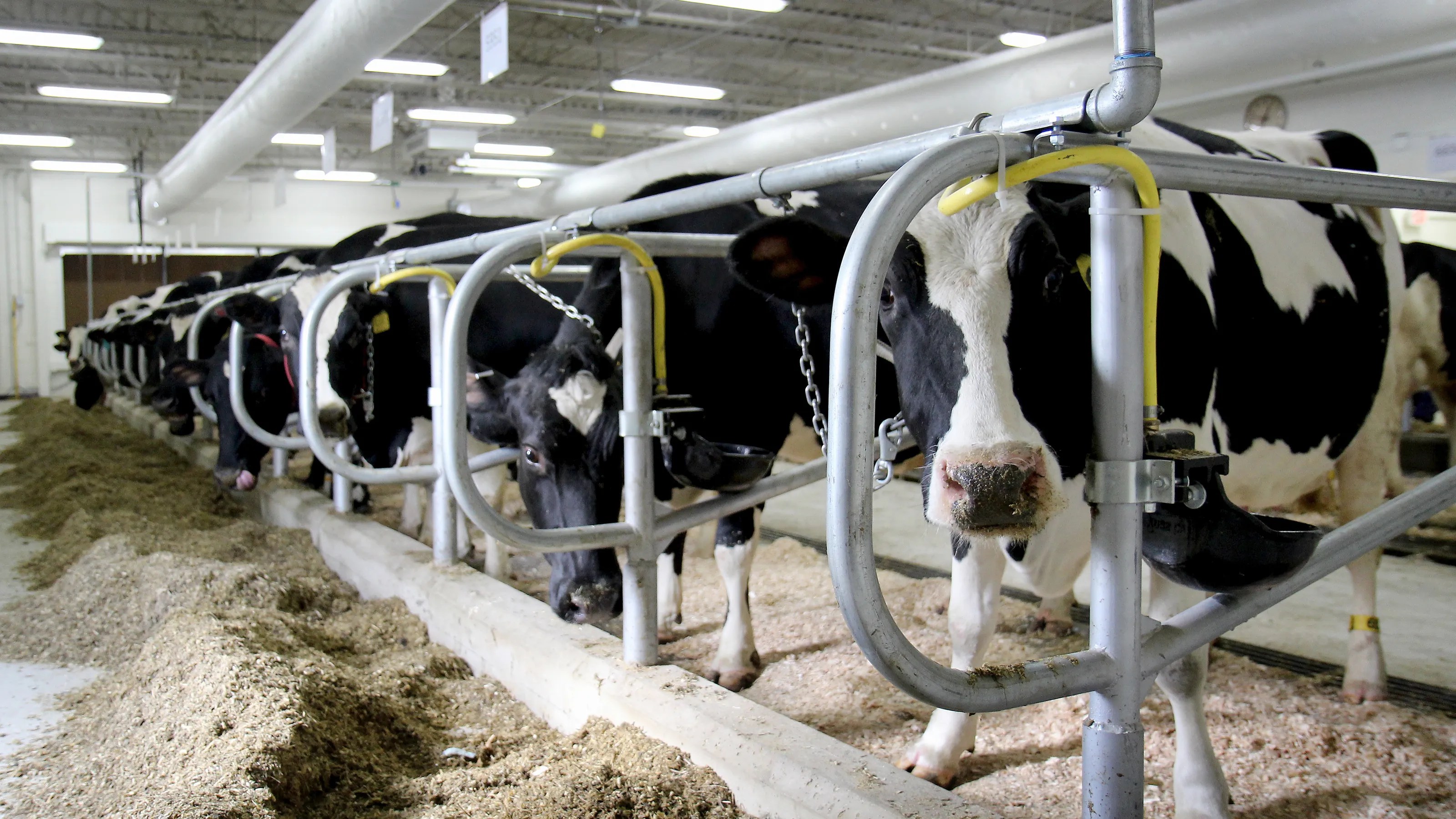
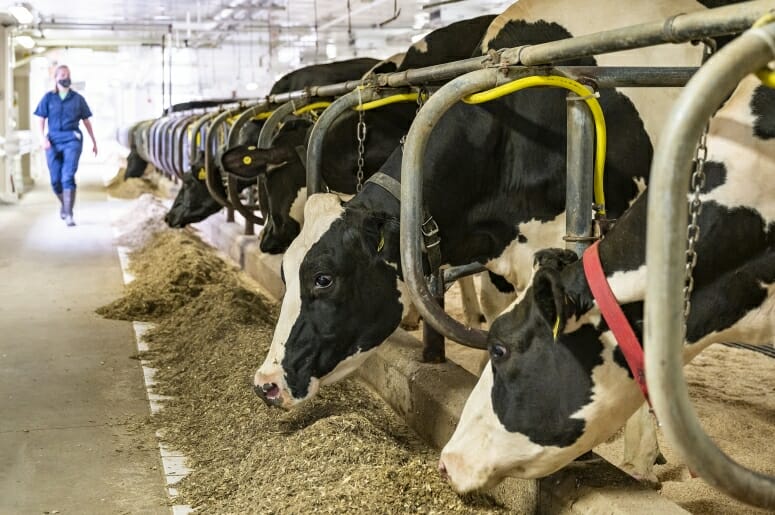
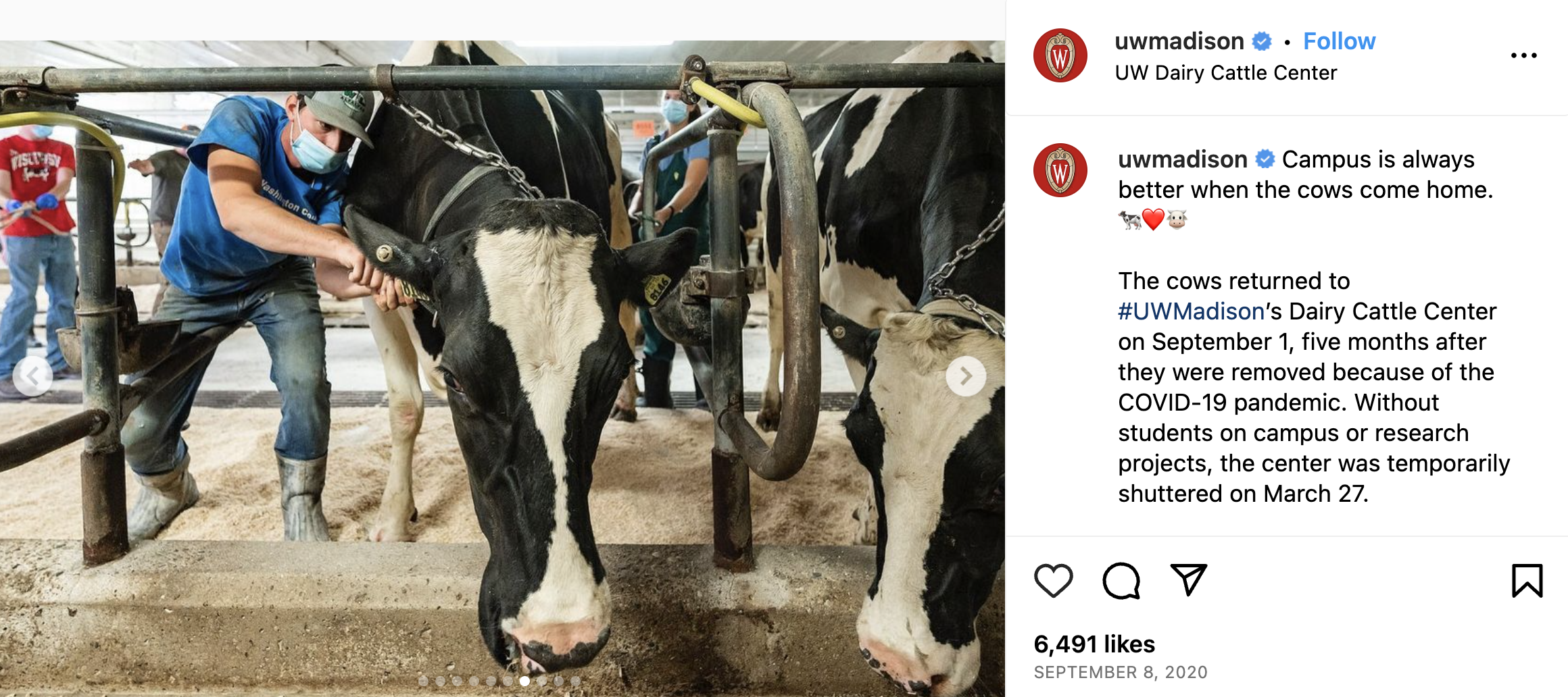
If you’re thinking, “Why are those cows chained at the neck like it’s a maximum security bovine prison??” then we are alike.
I learned that this kind of barn setup is called a tie stall barn. It’s very common around the world, despite animal welfare advocates decrying it as cruel. About 40% of farms use tie stalls in the USA. In Canada it’s above 70%, and in some European countries usage is as high as 88%.
In a “continuous” tie stall barn the cows spend almost their time, day and night, tethered to a post.
In case it’s not obvious, the chain around the neck prevents the cow from moving much. They can’t groom properly, socialize, or turn around. They tend to exhibit signs of stress like tongue rolling, bar biting, and rubbing on equipment. Such purposeless and repetitive behavior is a universal sign of stress in animals.
The behavior of the chained cows sounds eerily similar to that of pregnant pigs that are confined to gestation crates. A gestation crate is a metal stall that is barely bigger than the body of the mother pig. All the sow can do is lie down and get suckled.
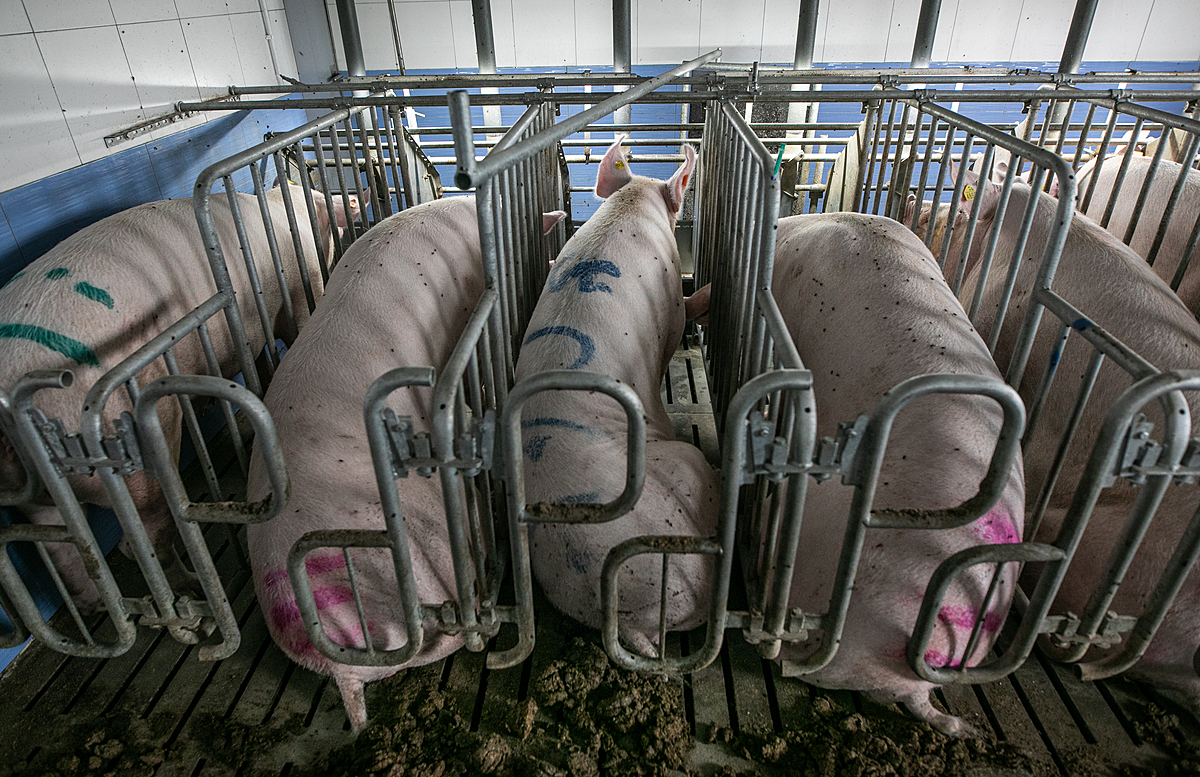
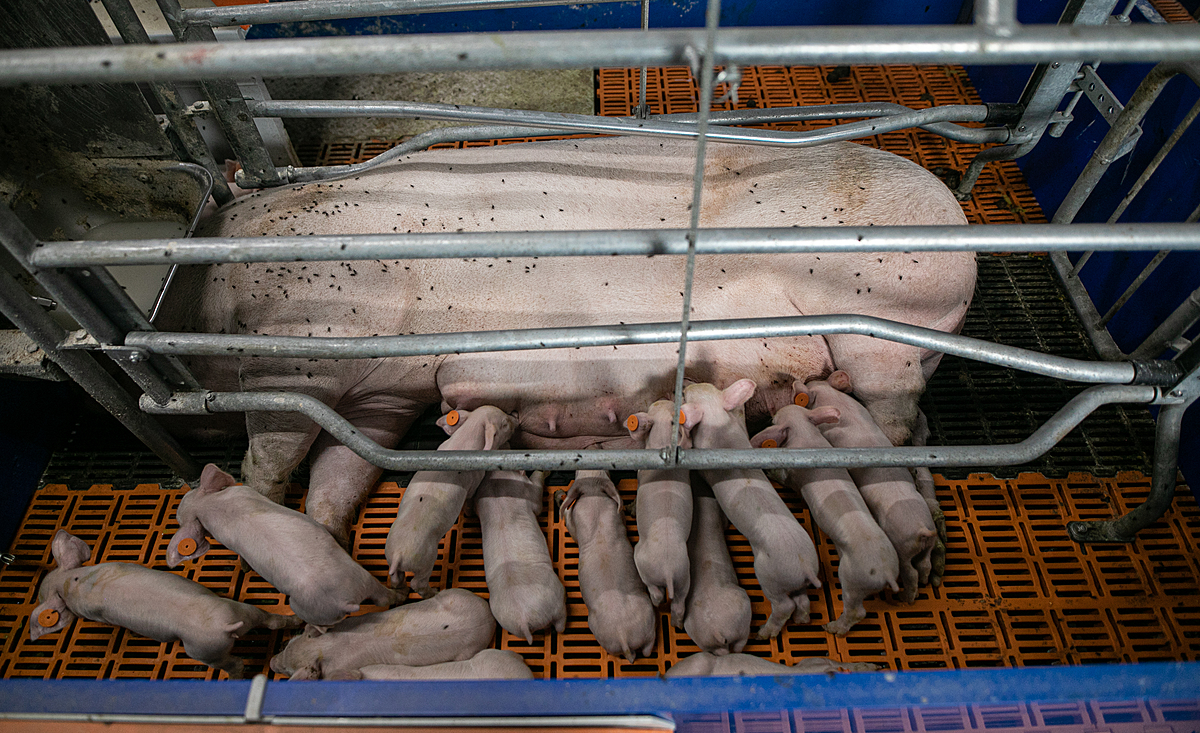
The difference between tie stalls and gestation crates is that the latter are a hot button issue in the USA right now.
California recently passed a law allowing sows more room, the animal agriculture industry fought against it, and the Supreme Court recently upheld the California law allowing for more space.
In contrast don’t hear much about tie stall dairy barns. They remain very legal just about everywhere. (Shoutout to Austria, Norway, and the Netherlands for putting tie stall bans in place.)
Tie stalls are so normalized out here in the great midwest that Wisconsin’s premiere institution of higher education calls out that they use tie stalls on their website.
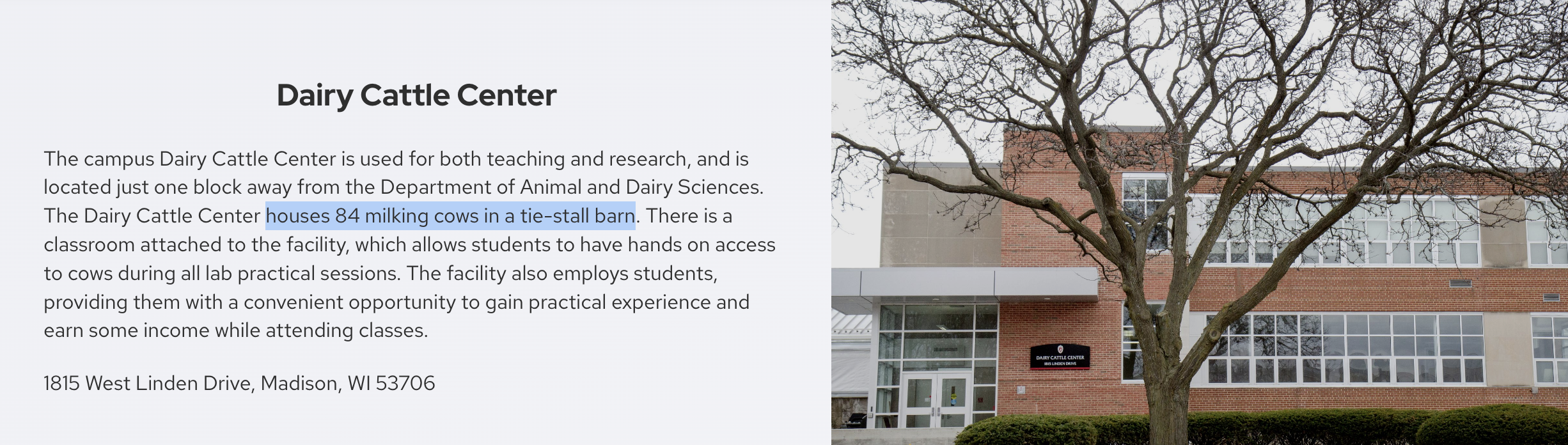
If they were ashamed in the slightest they would just say there’s a barn on campus. To me, it’s like selling clothing and highlighting on the tag that it was made by a child in a sweatshop.
In a sane world, UW Madison’s School of Veterinary Medicine would be the ones pushing back on all this. Vets love animals, right?!
I was able to find content on the University of Wisconsin’s Veterinary website about tie stall barns. The vets acknowledge that “some countries are phasing out tie stall housing all together…”
Good start. They could have finished with “and we support a total ban in the USA as well. Free the cows! Power to the animals!”
Instead, they continue in a most depressing fashion. They discuss how the tie stall barns can be “successfully remodeled or built to improve cow comfort and well-being.”
Let’s take a look at a couple key improvements they recommend. One is to put some sand on the ground so the cows are not on concrete all day.
Hand to God, this is the picture they used to show a successful, animal welfare improving, “sand conversion”.
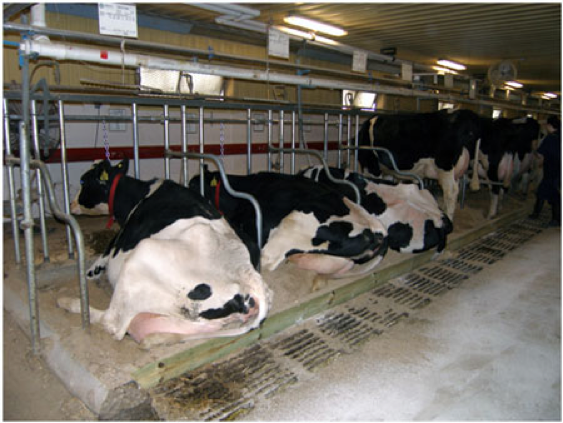
An investigative journalist working to show miserable dairy cow living conditions couldn’t take a better picture! So dingy, so foul. It looks like cow Abu Ghraib. Would you wish a situation like that on your worst enemy?
I don’t know what it would take to make tie stall living tolerable, but 1/4 inch of dirty sand ain’t it. I shouldn’t be too harsh, as any improvement is better than nothing. But wow, the bar is low.
The veterinarians also suggest finding just the right height for the “cow trainer.” I had to look that term up. It’s an electrified piece of metal which hangs above the cow and shocks it if they try to poop the wrong way. Seriously.
From DairyProducer.com: “Electric trainers will train cows to step back when arching their backs for defecation or urination. The purpose is to position cows so they defecate or urinate in the gutter, rather than the stall bed.”
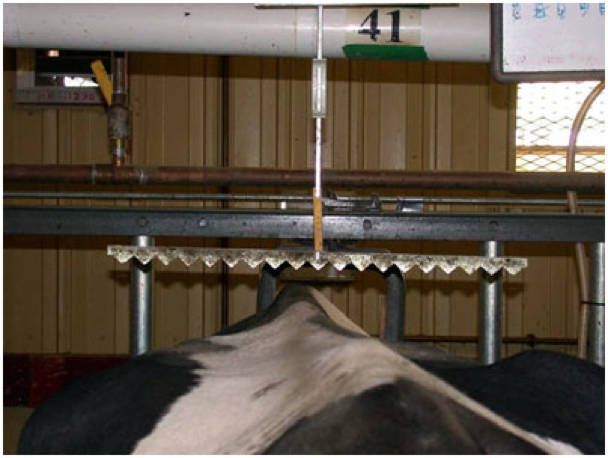
The brave and daring improvement put forth by the UW Madison vets is to move the height of the trainer from 2 inches above the cow to 4 inches above. But only once the cow is properly trained at the two inch height, of course.
To complete the tone deaf trifecta of UW Madison media outlets, their official instagram account once posted pictures of their restricted cows next to captions full of whimsy and heart emojis.
Because so much of US animal agriculture is such a horror show, most activists (rightly) focus on the causes with the potential to reduce the most total suffering. We all have limited time and energy. This situation speaks more to the magnitude of awfulness in the factory farming system than to tie stalls being a chill and normal thing for advanced societies to do to animals.
Maybe one day, after we’ve stopped cramming 6 egg laying hens into cages the size of a microwave, and we’ve stopped breeding genetic freak turkeys that can’t fly and will never see the sun, and we’ve stopped killing thousands of pigs at a time by shutting off the ventilation to their barns and cooking them alive, and we’ve stopped breeding lesion filled salmon in overcrowded, dirty tanks, and we’ve stopped a thousand other horrifying animal agriculture practices, Americans will finally look at the tie stalls and say, “I guess it wouldn’t hurt to unchain the cows and let them move about a little.”


then horses shouldn’t be in stalls either
true!