I am a sunlight junkie. I grew up in Southern California and I can’t help it. I don’t care how cold it is outside, if the sun is shining, it’s a nice day in my book.
After moving to the less sunny (but not as grey as you might think) state of Wisconsin, plus getting a WFH job that meant I’d be in a home office for large chunks of the day, I started looking into ways to brighten up my desk space.
Most rooms in a standard American home, even ones that don’t feel dark, are much dimmer than you might imagine. You can measure the lux (lumens per square foot, standard measure of light intensity) of normally lit indoor rooms and see that they are nowhere near as bright as the outdoors would be on even the cloudiest of days. I’ll let my latest bright light guru, the philosopher and author David Chapman, explain:
Summer sunlight is about 100,000 lux. An overcast winter day is 1,000 to 2,500 lux. This is a huge difference! It may not be so obvious because our eyes’ irises open and close to partially—but not completely—compensate.Adequate supplementation means getting something more like 100,000 lux than 1,000. The medical recommendation for SAD treatment is 10,000 lux for at least half an hour each morning. I’ve found I need more than that.
Typical indoor lighting is 100–500 lux. That means a conventionally “brightly lit room” gives you less than one percent as much light as summer sun. You cannot adequately supplement your light needs by merely doubling the number of lamps you have, or by putting 120 watt bulbs in place of 60 watt ones.
David Chapman, You Need More Lux
I don’t have seasonal affective disorder (SAD), but I have been depressed at times in my life. There’s pretty strong evidence that light therapy can help with depression and mood. It seems to me that we’re evolved to get a lot more light than the modern world provides.
That conviction in mind, I only did what makes sense — I recalled that I’d once stumbled upon an awesome blog post by an AI researcher who built an anti-SAD room for his wife by daisy chaining together an absurd amount of LED light bulbs. He called the finished product the Lumenator. I set out to emulate that.
My Super Bright Office, Version 1
The blogger in question, Eliezer Yudkowsky, needed the Lumenator because commercially available SAD lights often don’t give off as much light as they claim. Plus, SAD lights only illuminate a small area and require you to be unnaturally close to the light to get any effect. David Chapman spends considerable digital ink railing against standard SAD lights on the market.
I recommend against buying anything sold as a “light therapy lamp” or “SAD light.” They are underpowered, overpriced, and the advertising claims made for them are misleading, bordering on fraudulent.
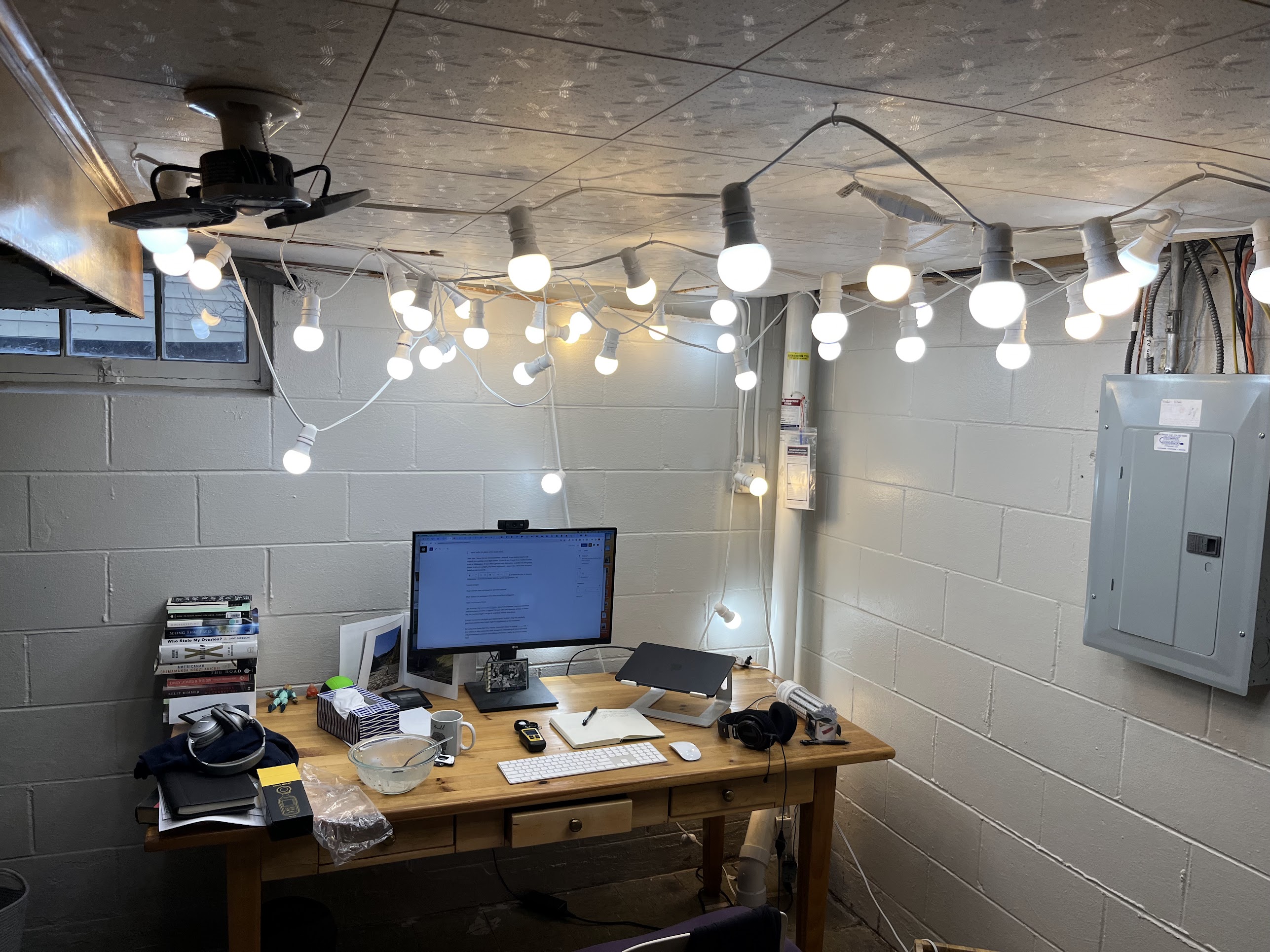
A few hundred dollars and ~50 standard lightbulbs later, I had my own version of the Lumenator up and running.
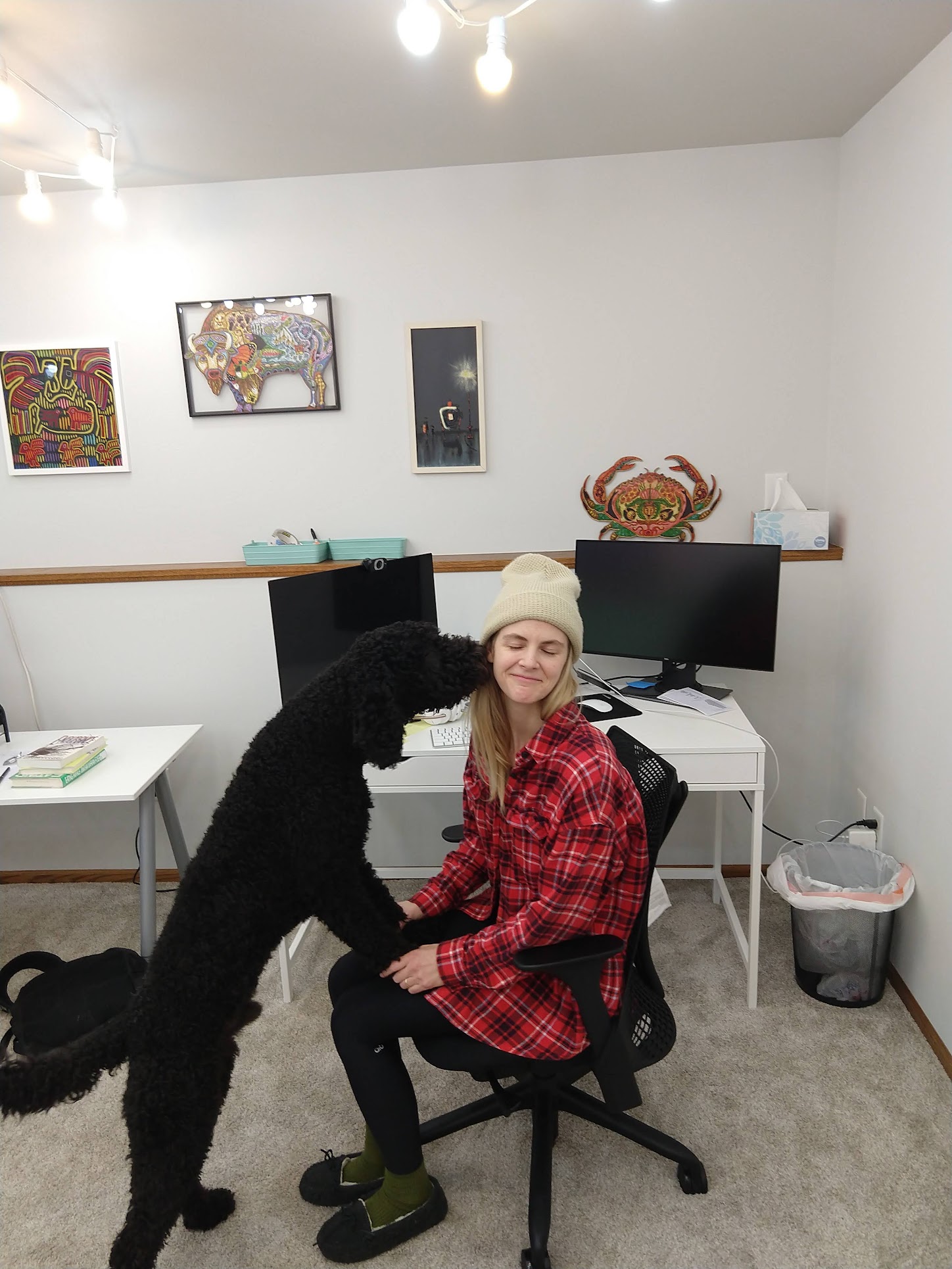
This room rocked. I felt more energized working in the brightly lit space.
Ashley, and almost everyone else I brought in to the office, thought it was overkill. Maybe most people are more sensitive to LED light than I am.
My Super Bright Office, Version 2
My desk at our place in Milwaukee is in the basemen. It’s the perfect spot for a Lumenator, as the only natural light comes from two small storm windows.
This time, having read Chapman say that he feels better getting even more lux than the recommended 10,000, I got curious: how bright was the Lumenator really? I decided to measure the lux produced by my setup. Then I’d add more lights if I was far below 10,000.
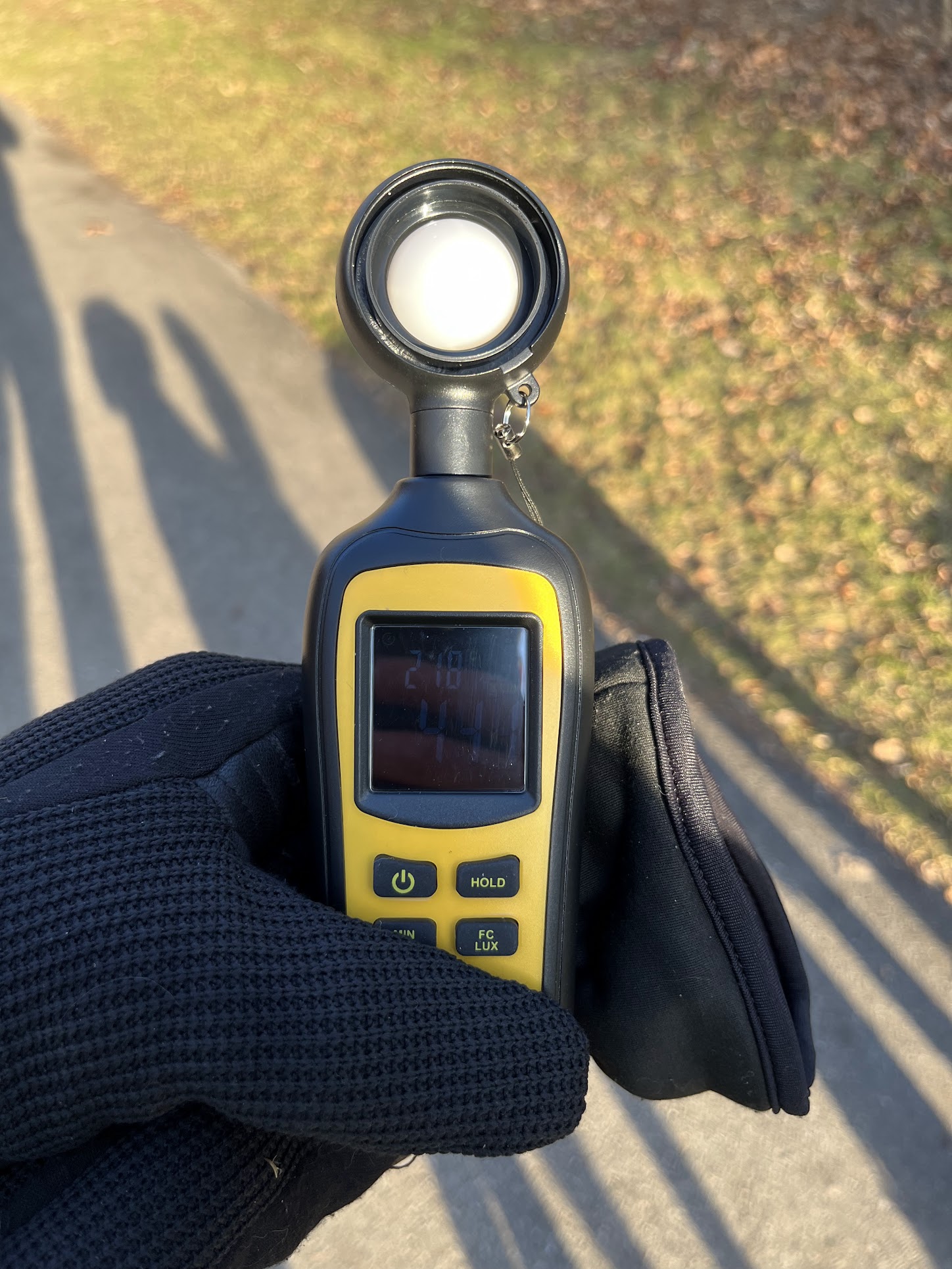
I got $30 light meter from Amazon. To test it out, I used it on a walk in Grant Park in Milwaukee. It was about 3pm in mid-December, and the sun was going down. In direct sunlight, my meter registered ~44,000 lux. That feels accurate based on my research. The testing could now begin.
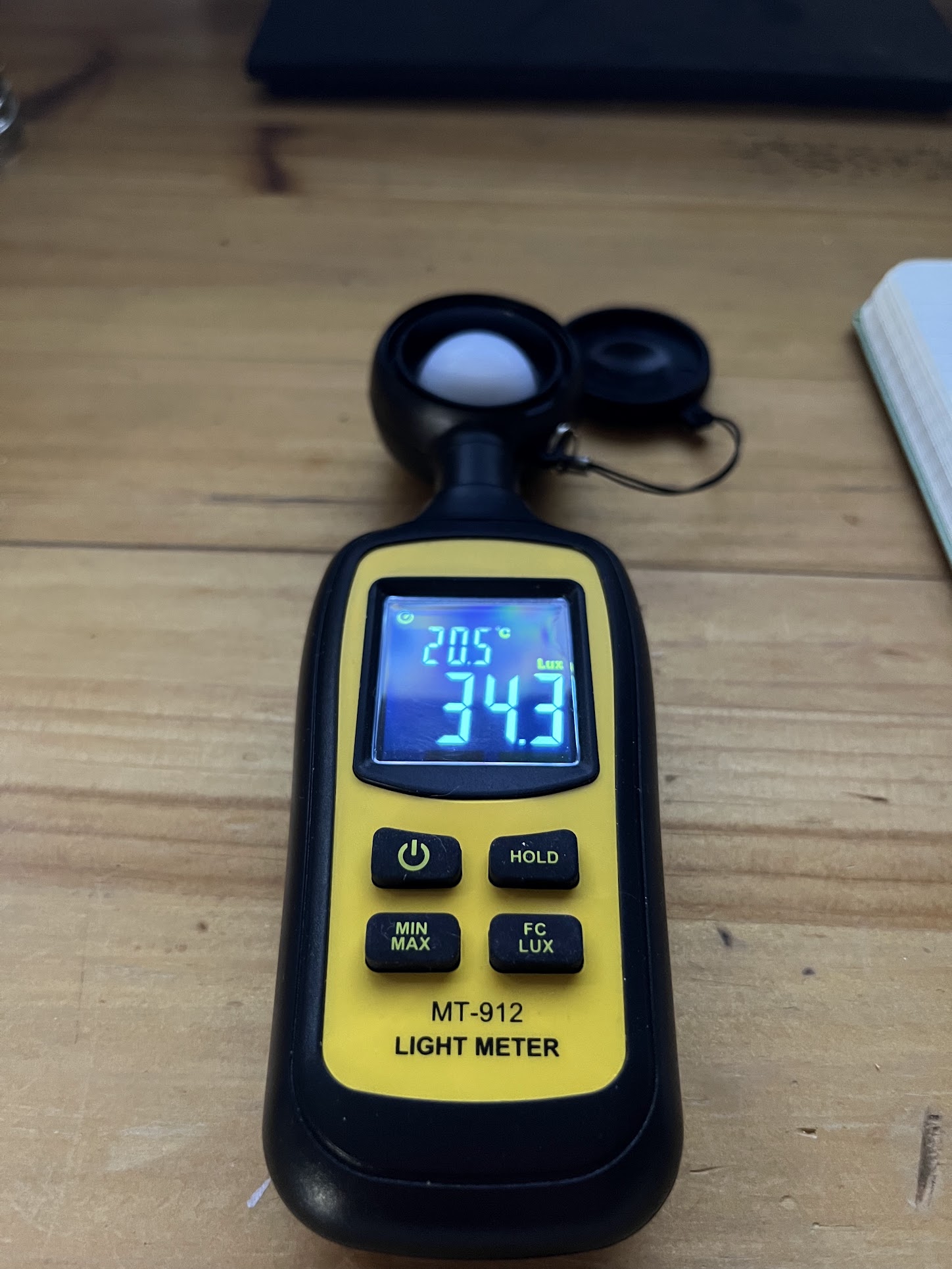
On a cloudy day in January, 2024, I measured the lux in my basement with no lights other than the storm windows and the glow of my computer monitor. It registered 34.
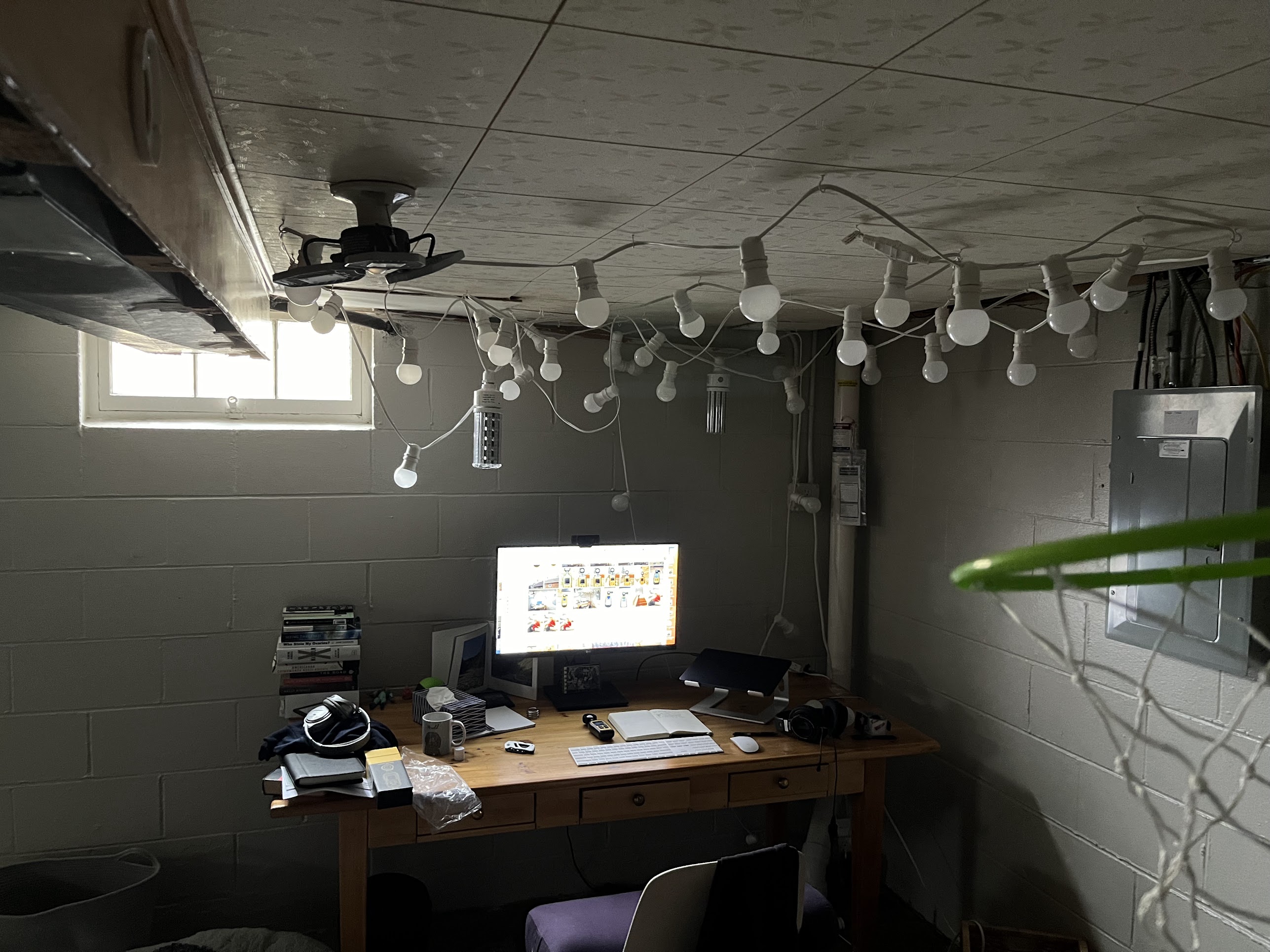
With ~40 of the 8.5w LED bulbs from my old lumenator turned on, the lux shot up to 2800.
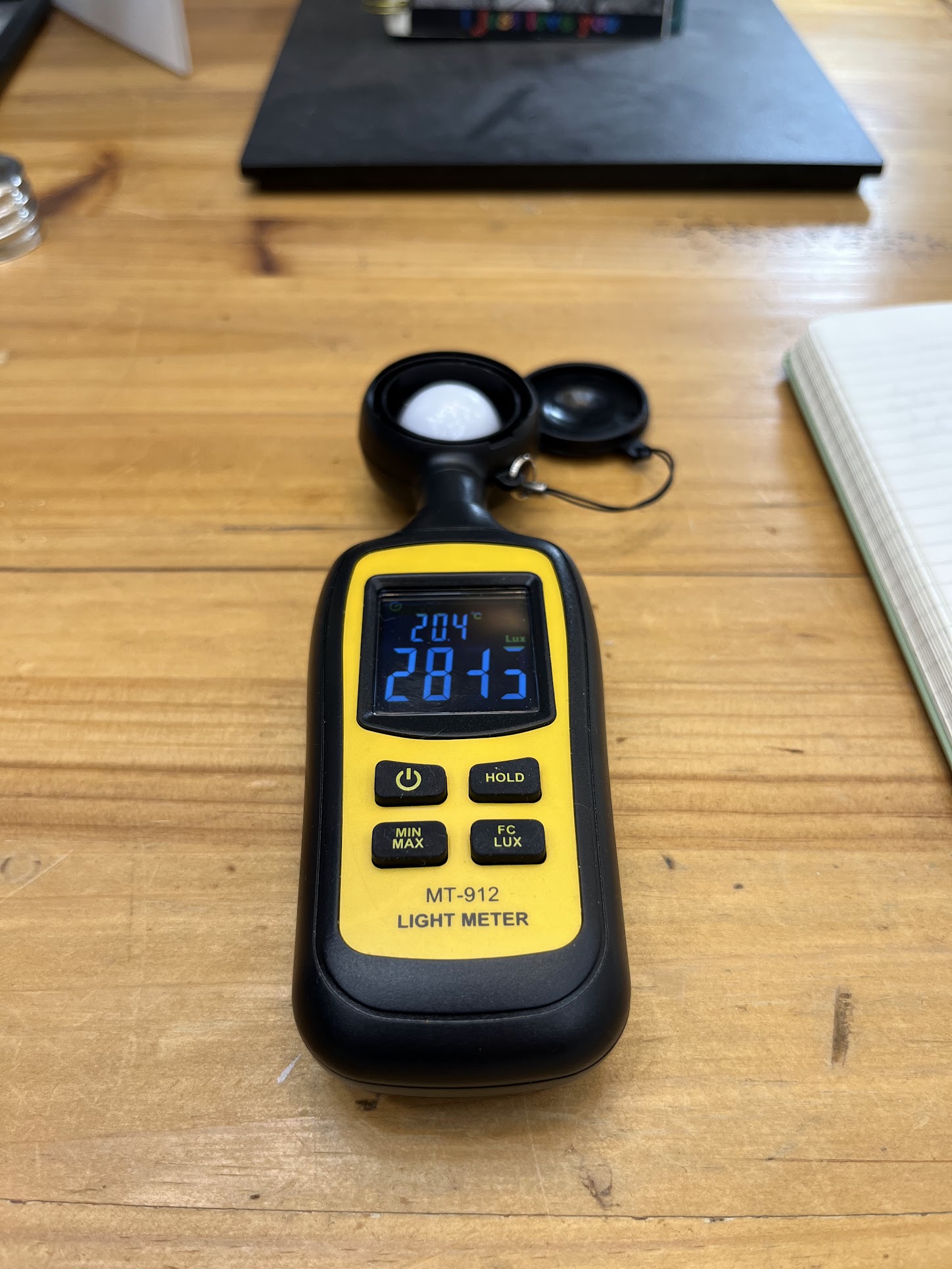
I decided to see if my inside brightness was matching the outside brightness. I went out with my meter, stood in my backyard at a random spot, and took a measurement.
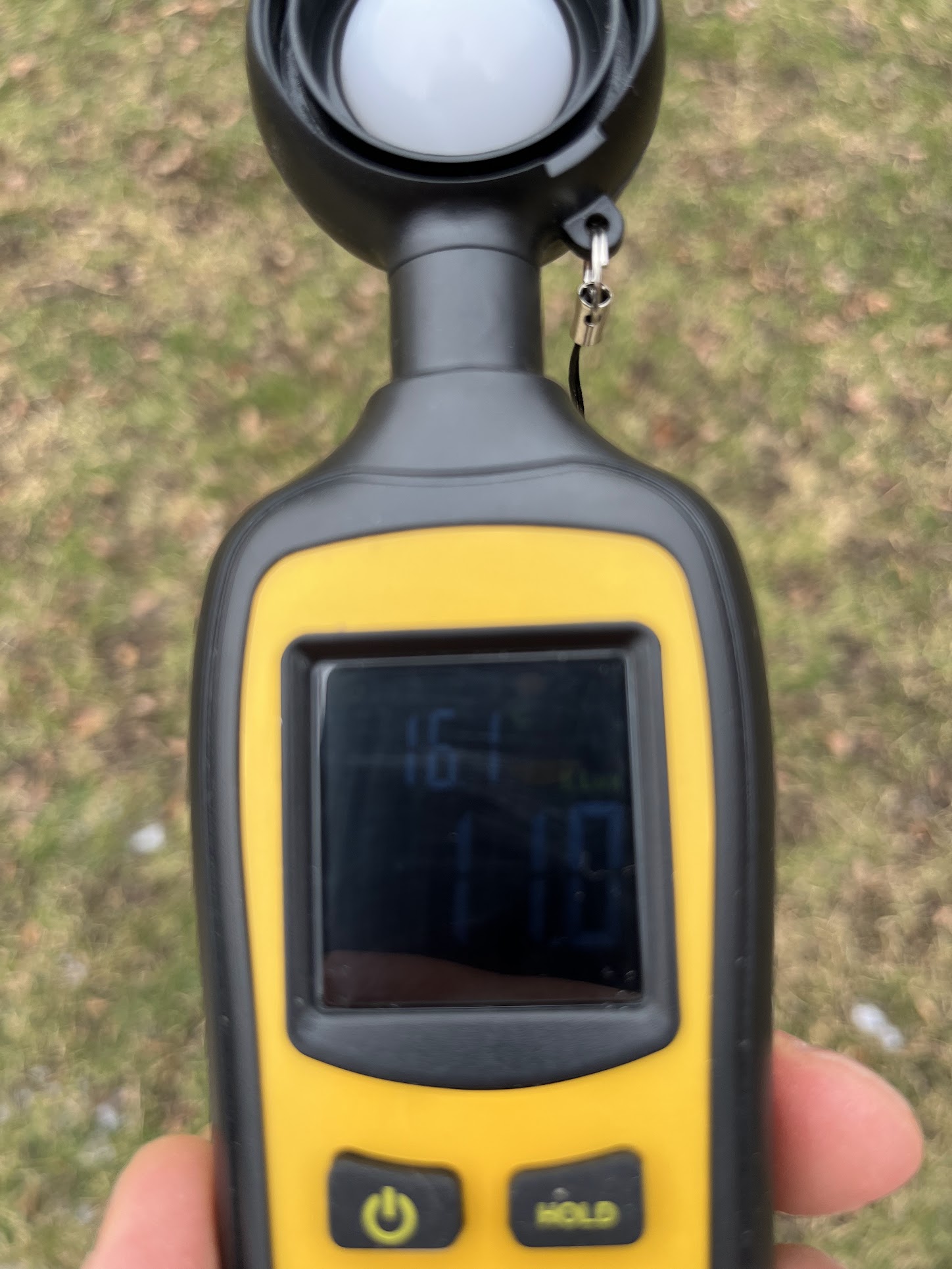
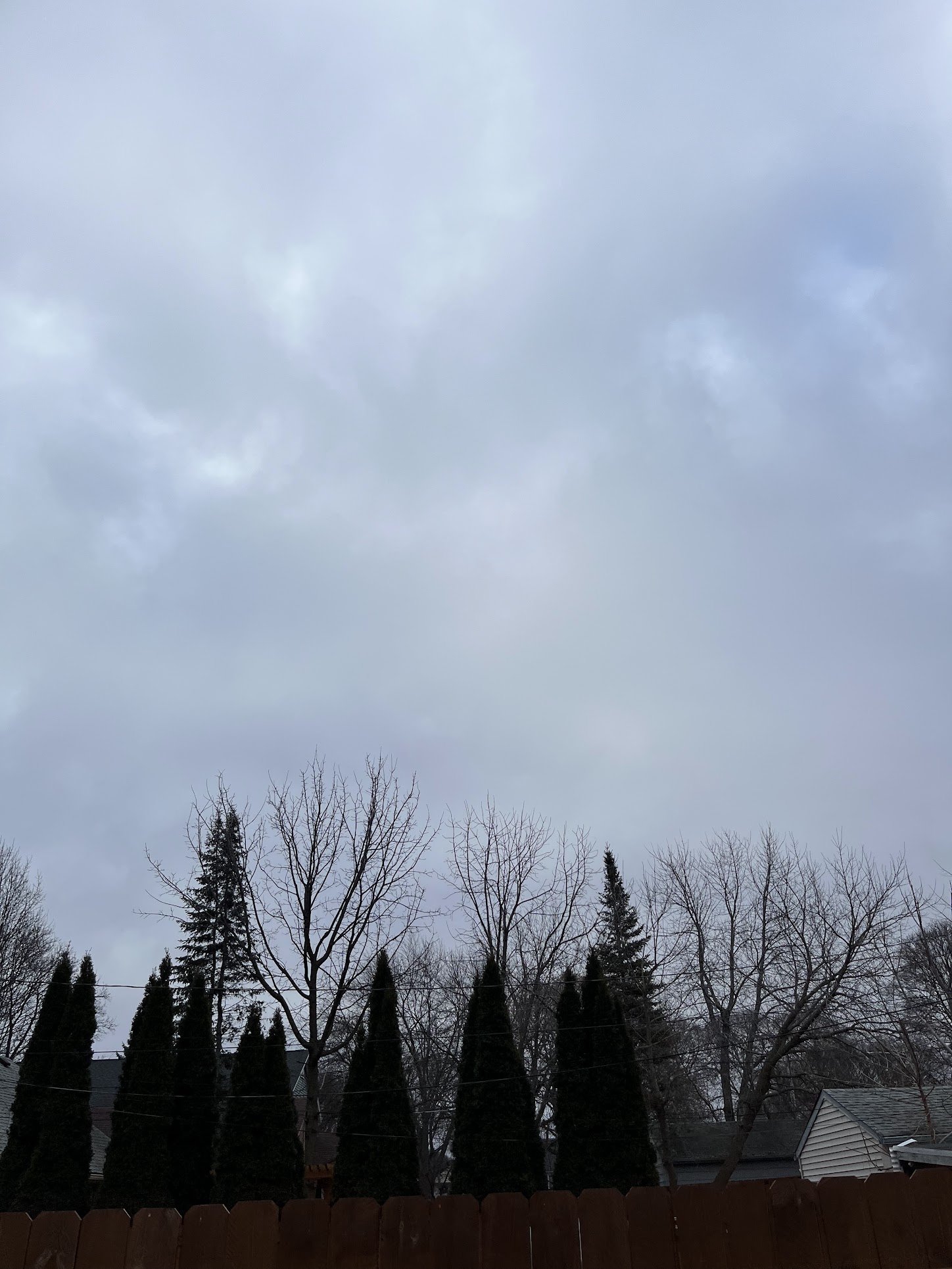
11,000 lux! About four times brighter than my office. Again, this was an overcast day in the Midwest in January. It wasn’t completely grey out, but it certainly wasn’t sunny. The sky looked like this:
It was time to call in the big guns. I had purchased a couple $30 corn cob LED lights, based on Chapman’s recommendation and other users reviews, and I was now ready to deploy them. The corn cobs are giant 100 watt lightbulbs. When the description for a light says they are for garages, barns, workshops, warehouses, factories, and parking lots, I know I’m on the right track.
I replaced two of my 8.5W Lumenator bulbs with the corn cobs and did another measurement.
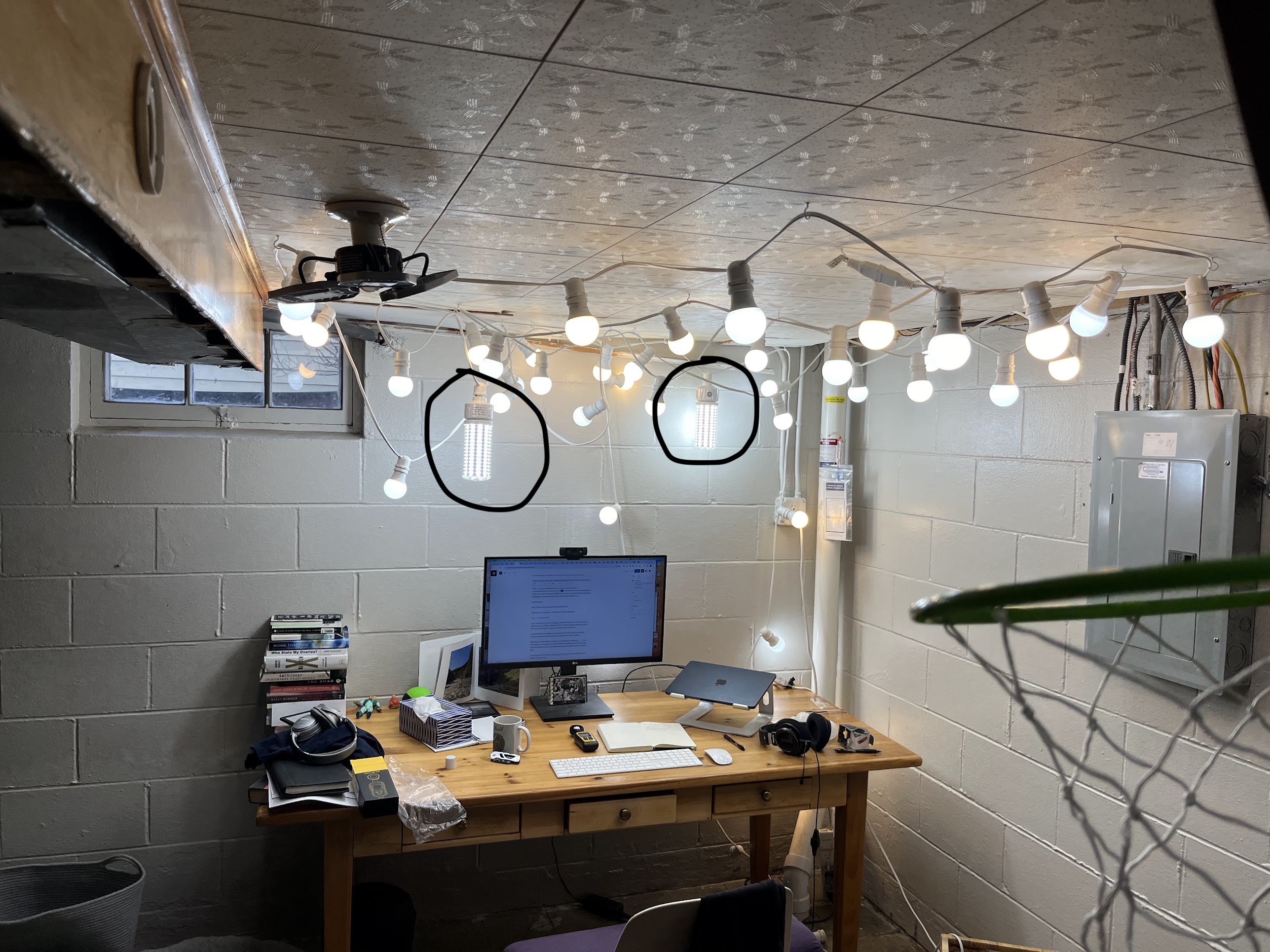
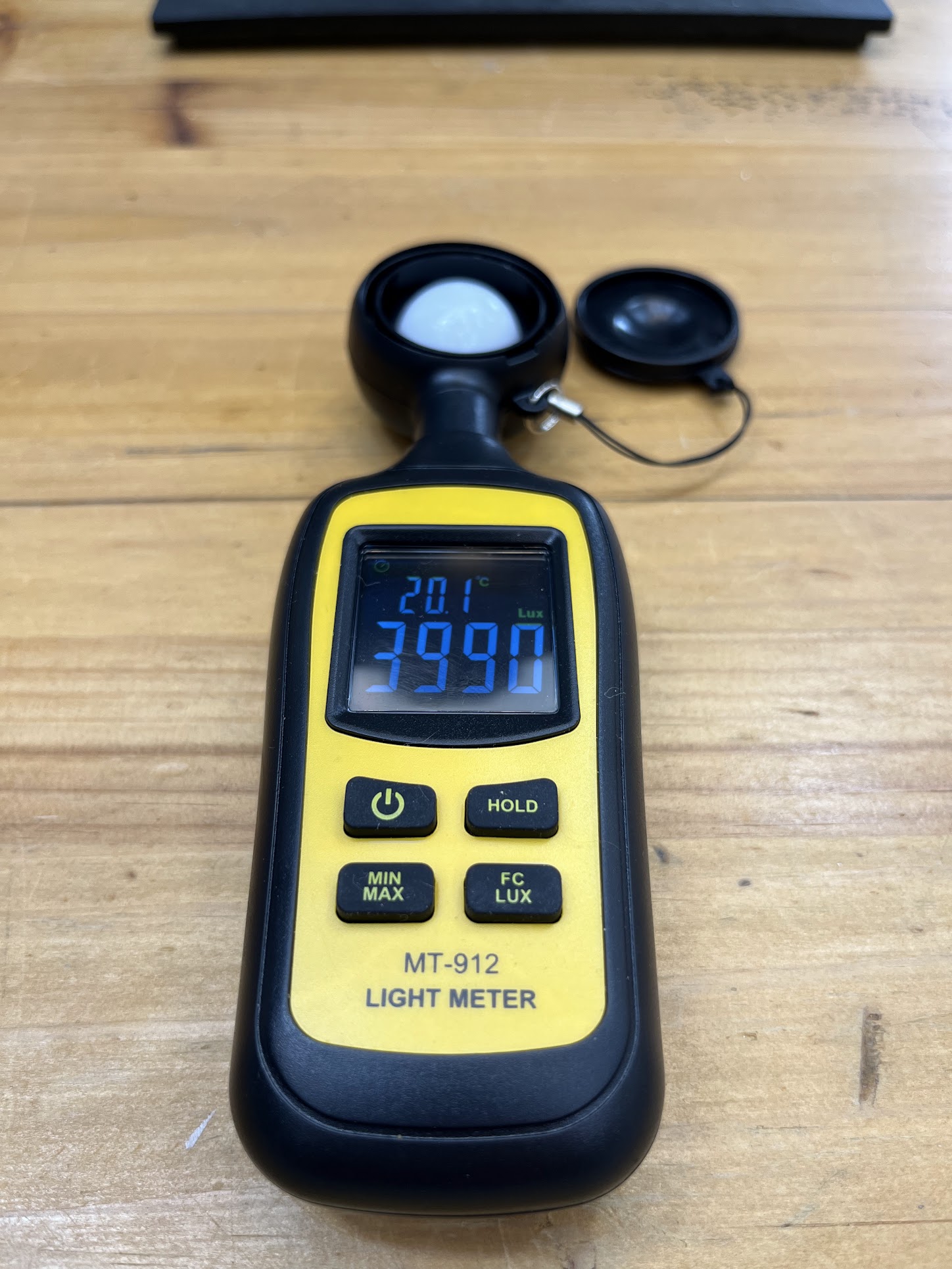
The corn cobs got me over 1000 extra lux.
I then realized I had another quick way to get more light. The previous owners left a three pronged flat panel led light in the basement. I fired it up and checked the light meter.
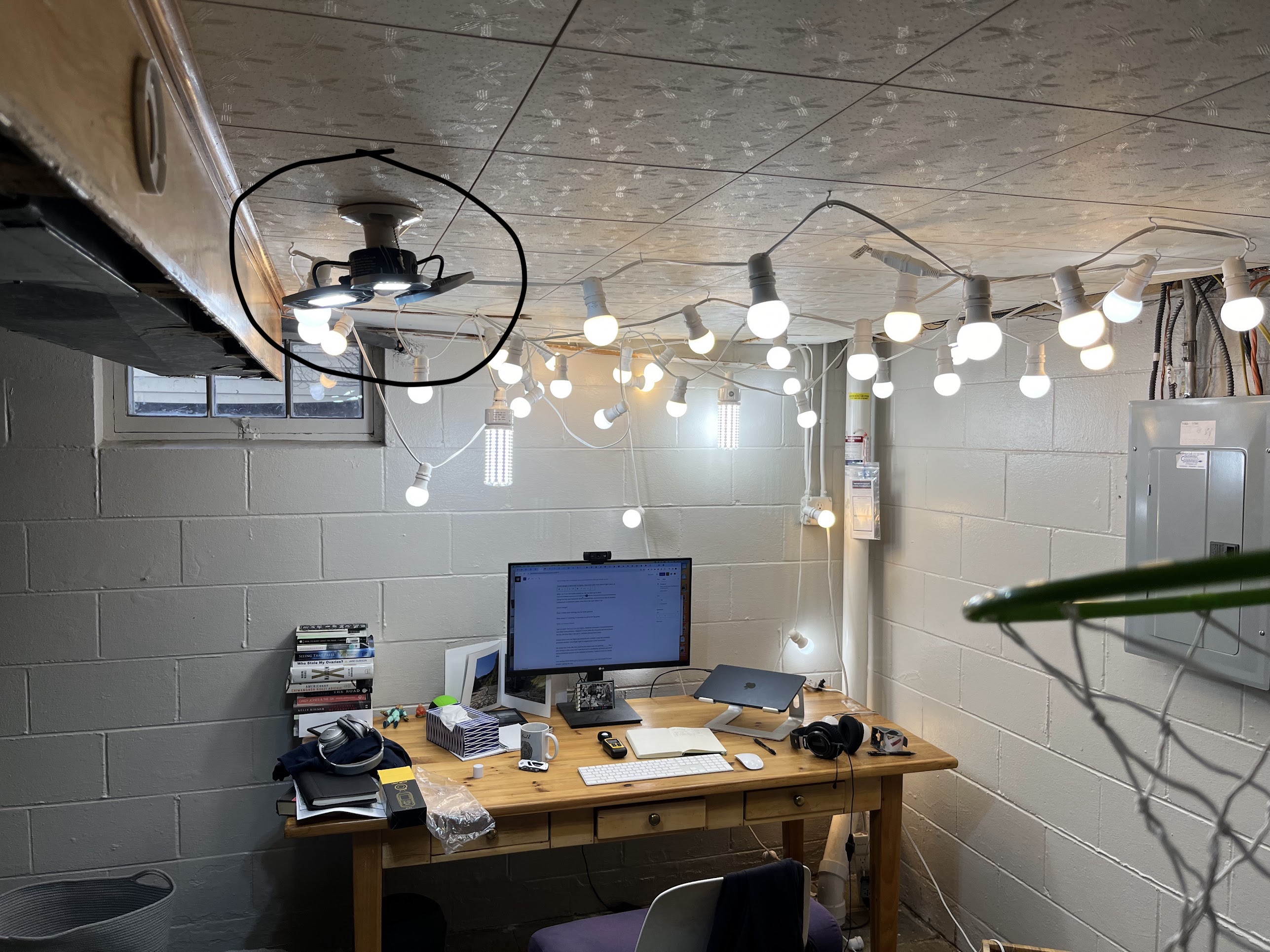
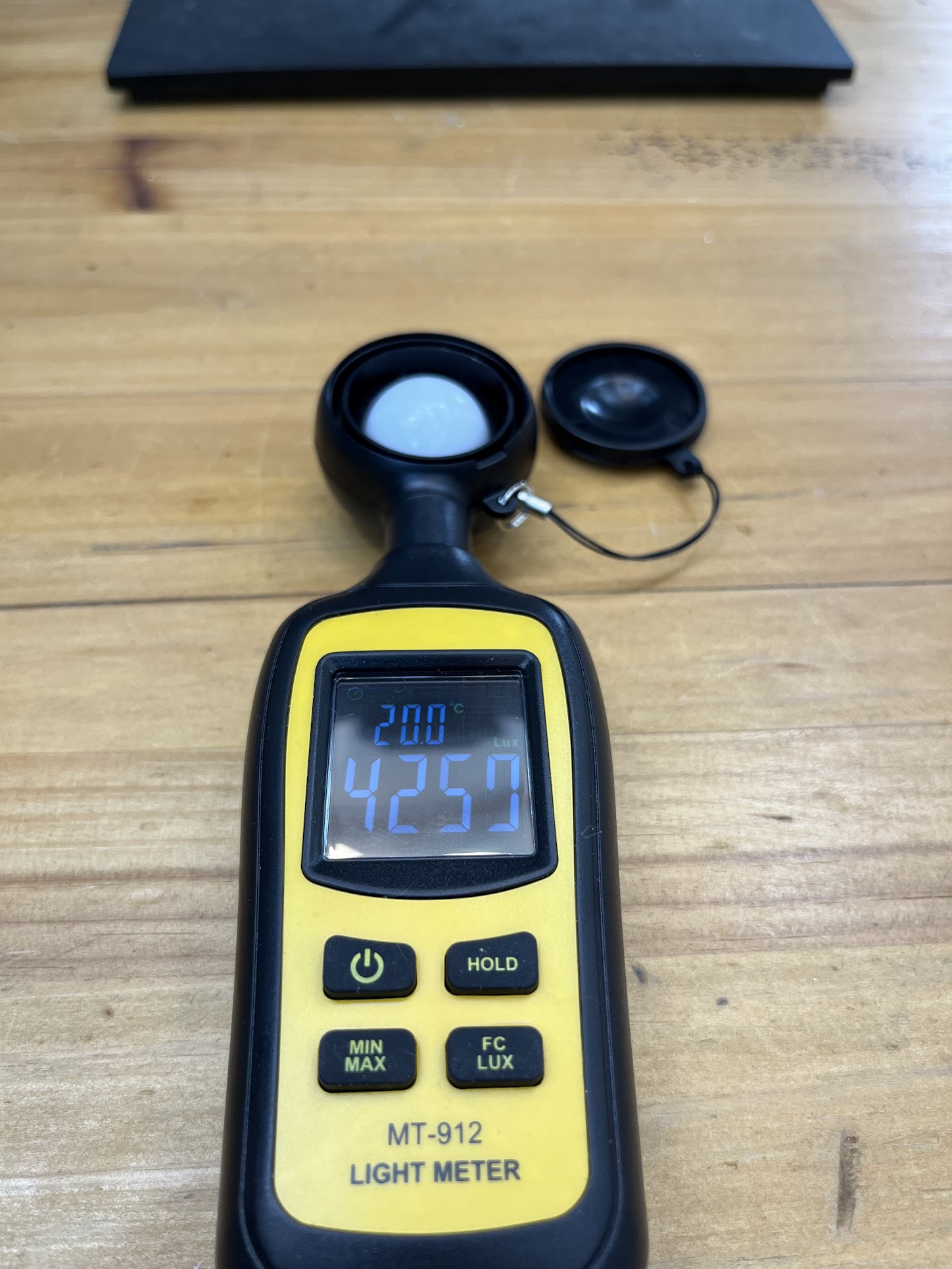
That gave me a solid 250 lux improvement, for “free.”
I then decided to see what would happen if I put the flat panel LED light directly above my workspace.
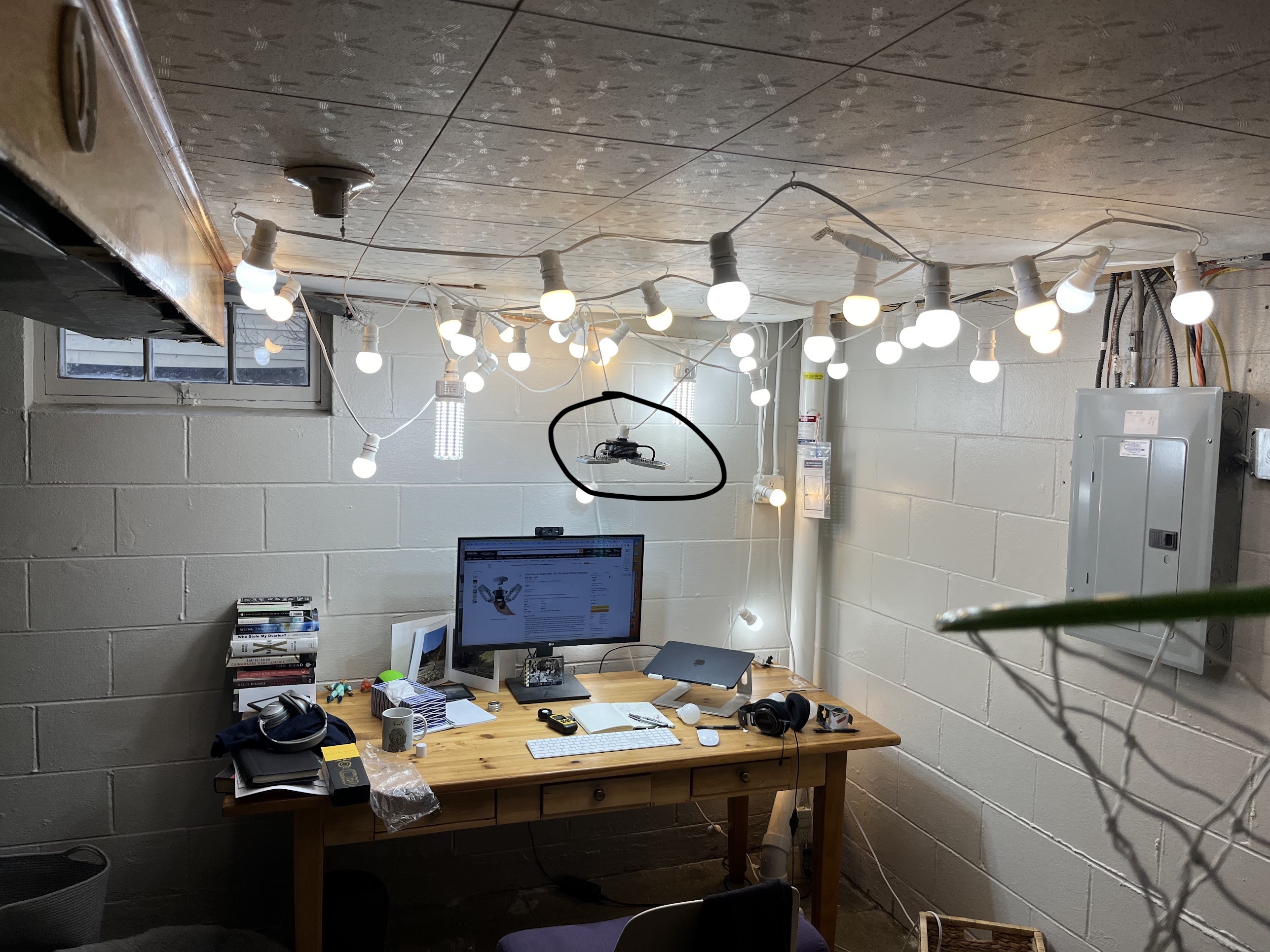
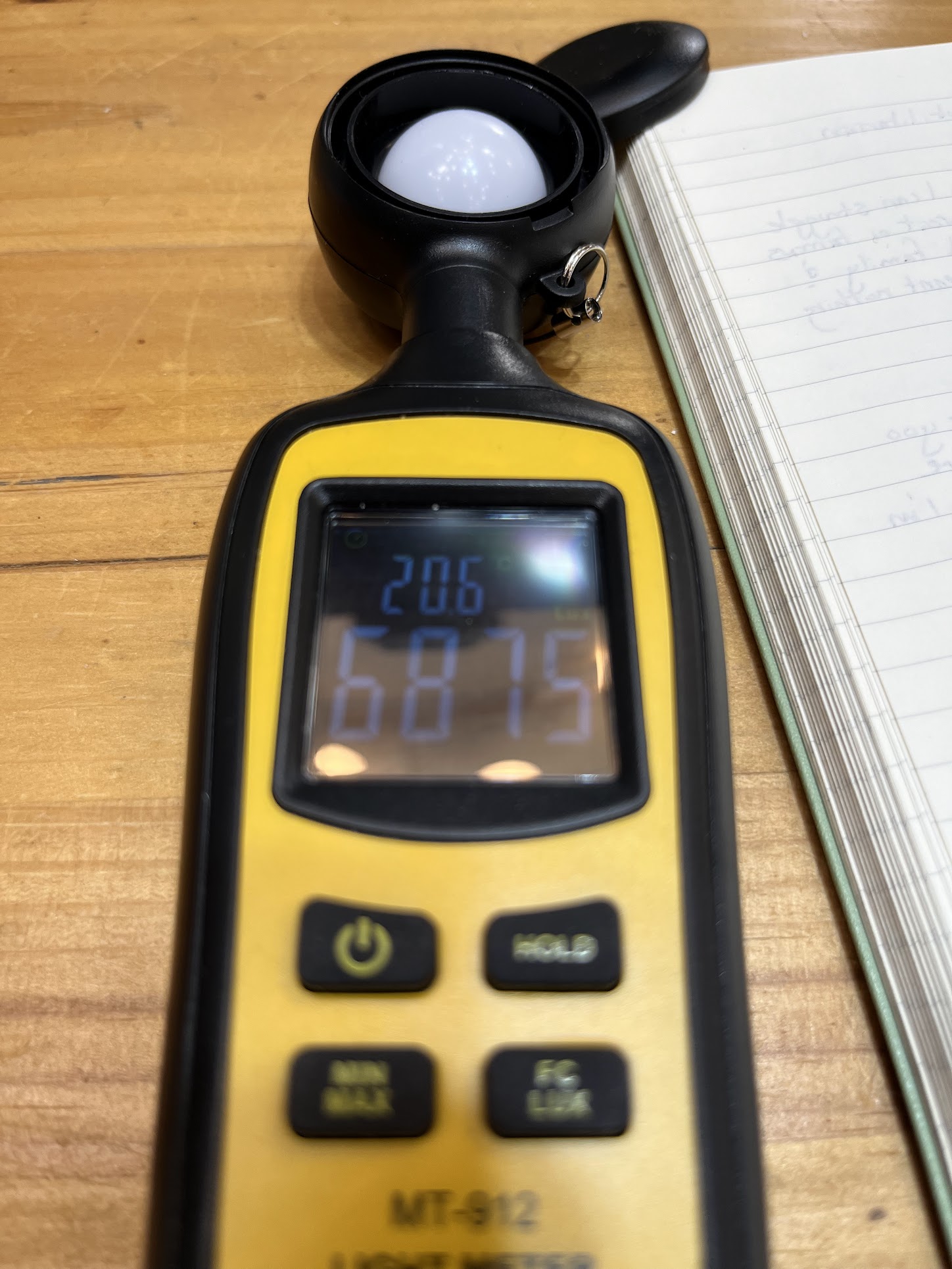
Now we’re talking. That brought a 2500 boost in lux. But, importantly, all these measurements were at the level of my desk. To really see the impact I was having, I wanted to investigate how much lux was getting into my eyes.
Get the lights close to your eyeballs to become a lux maxxer
Your proximity to the light source is paramount to getting more lux. That might sound obvious, but it’s not so intuitive when you’re actually manipulating the lights.
I think that’s because of how your irises naturally contract and open depending on the available light. All the setups I’ve documented in this post looked very similar to me. It didn’t feel much brighter at my desk when I moved the flat panel light a mere 5 feet closer, but the meter indicated a huge boost in light.
I decided to do some measurements at eye level, while changing the positioning of one of the corn cobs and the flat panel.
I found that the turbo boost in lux I achieved from moving the flat panel closer went away. Yes, if I pointed every panel straight down, it would blast a whole bunch of lumens down at my desk. But most of that was not reaching my eyes. Even if I adjusted the panels to point more toward my face, they still produced more light at the desk level than a corn cob in the same position.
The following two pictures have a 500 lux difference at the desk level (higher desk levels were with the flat panel hanging above me) but the same lux at the eye level.
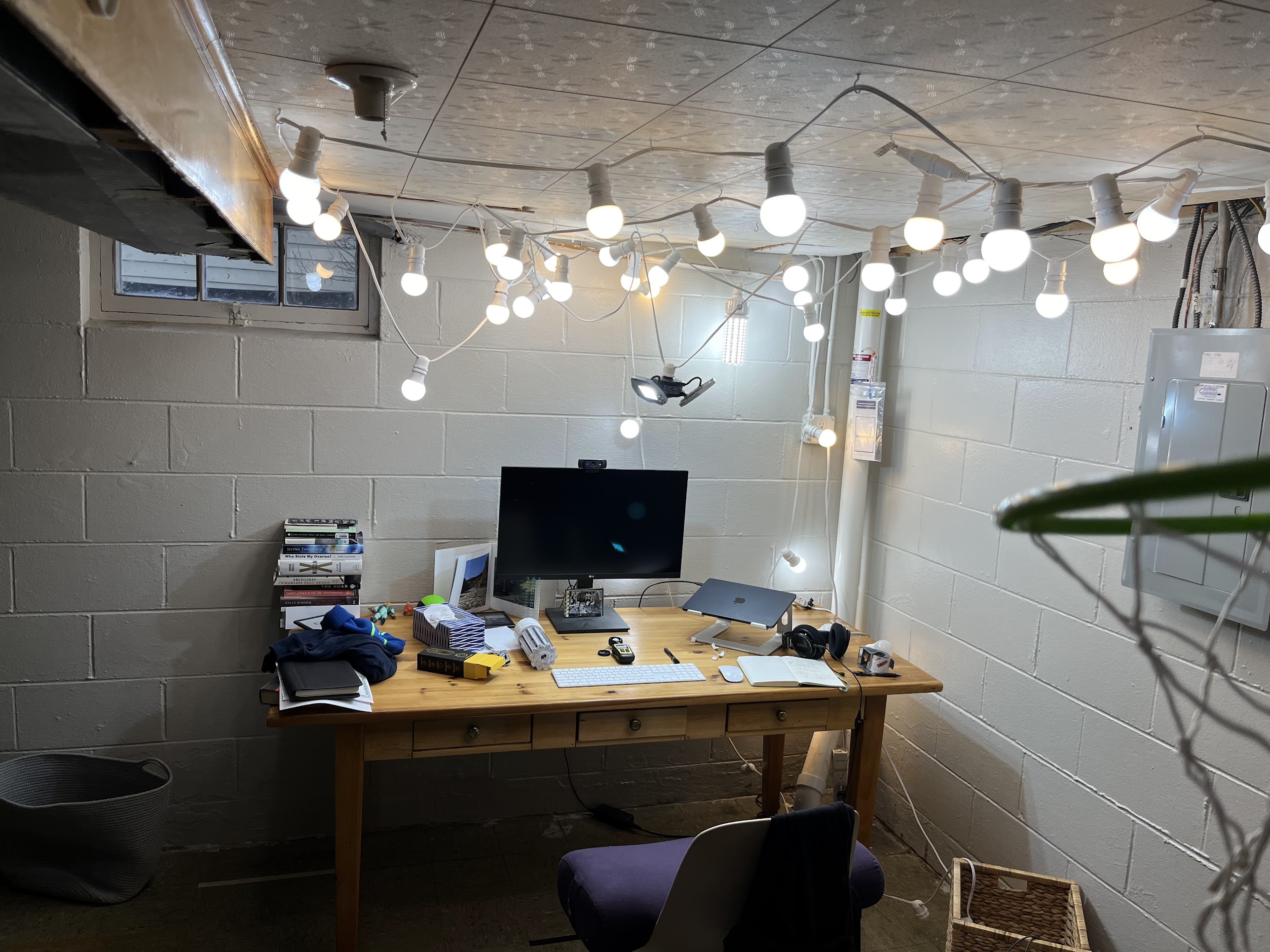
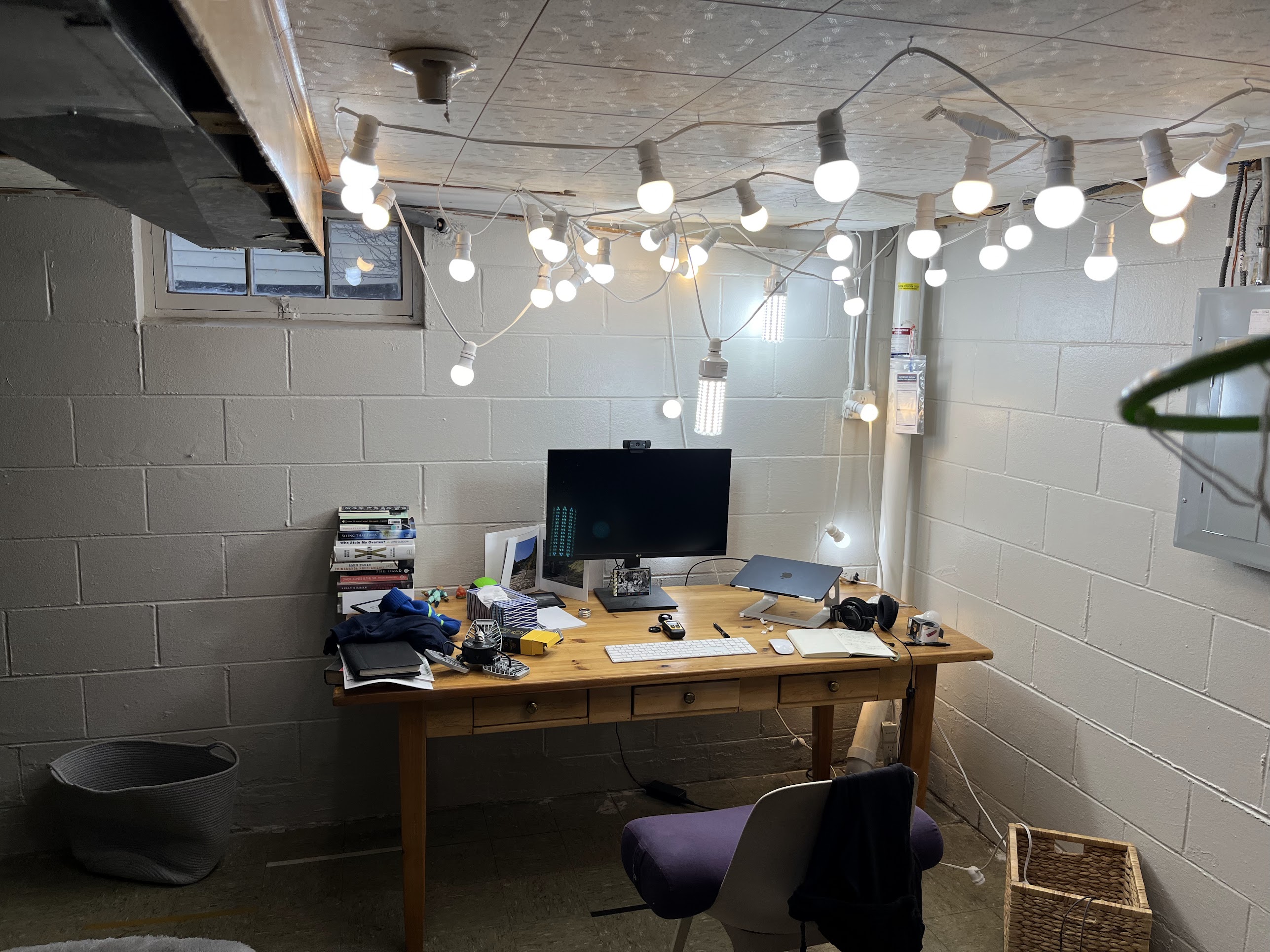
Doing all this makes it clear why some people build aluminum foil backings behind their corn cobs to redirect the maximal amount of light toward where they are sitting, and why large flat panel LEDs are popular amongst the lighting nerd crowd.
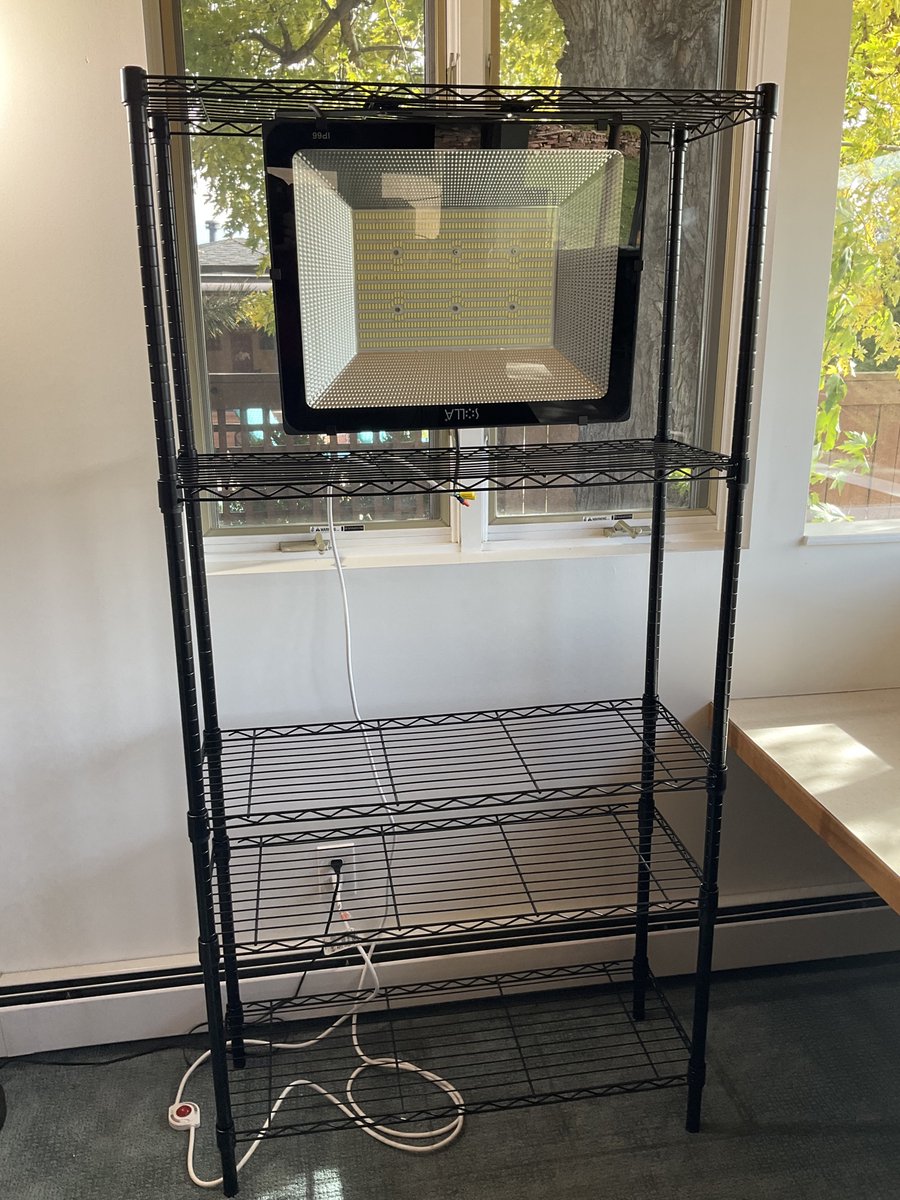
You really do need a lot of light concentrated in a small area to get that lux number to increase. The cylindrical shape of a standard bulb is not ideal for our purposes.
Thankfully, the lighting industry is more than ready to meet the challenge of blasting oodles of light into a concentrated area. My obsession took a fun turn once I expanded my research to include more professional grade setups.
My Super Bright Office, Version 3: Meet the Godox
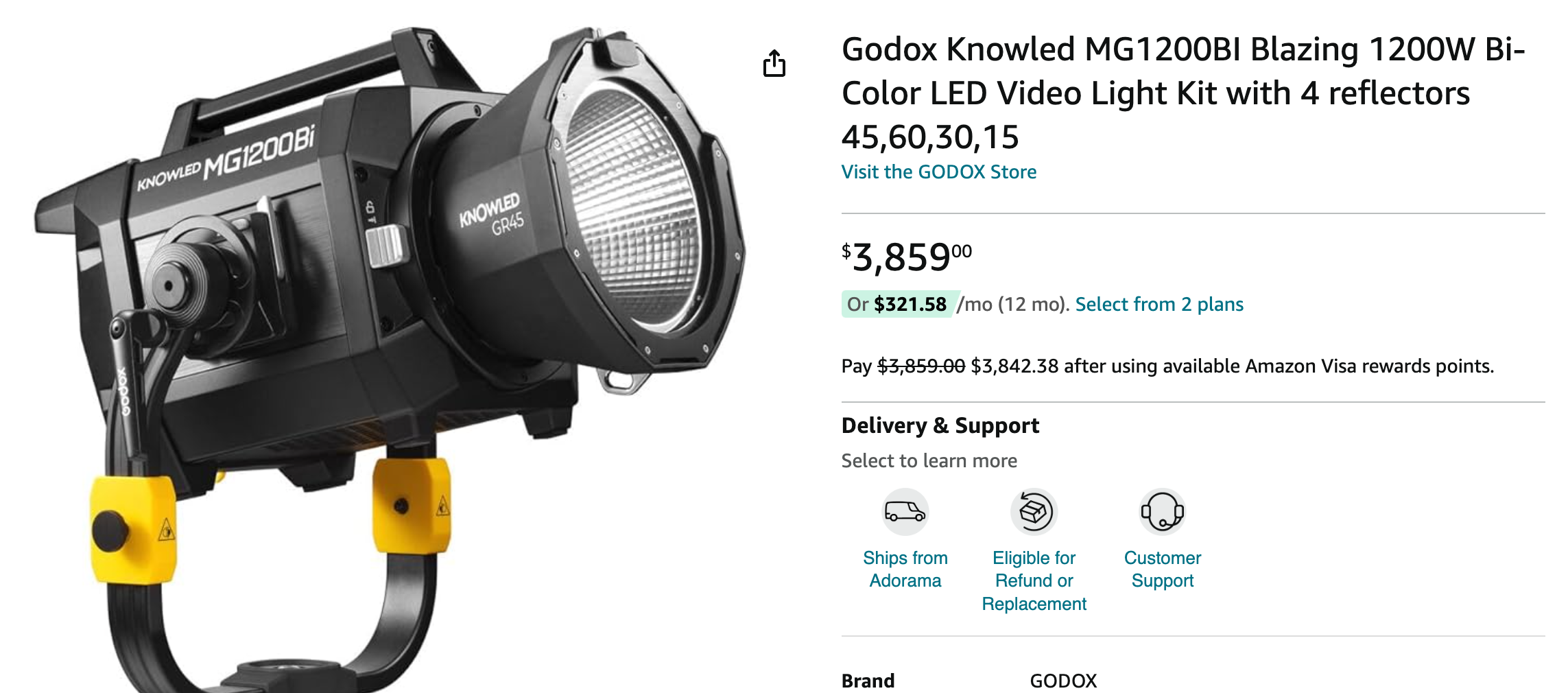
No, I did not sell one of our cars and use the funds to purchase a $4,000 light. (yet)
I did get a baby version though, called the Godox LA150D. It’s still pricey, at $179, but well within the means of budget conscious lighting sickos. I like it because it has a very high color index rating (CRI). I honestly don’t fully understand what that means but it seems good and like it should make the light feel more “natural.”
More importantly, with my Godox fired up, I registered 11,500 lux at eye level. (directly next to the light it measured 92,000 lux!)
I would include a picture of the reading on my meter but the light is so bright it washes out the numbers on my light meter screen.
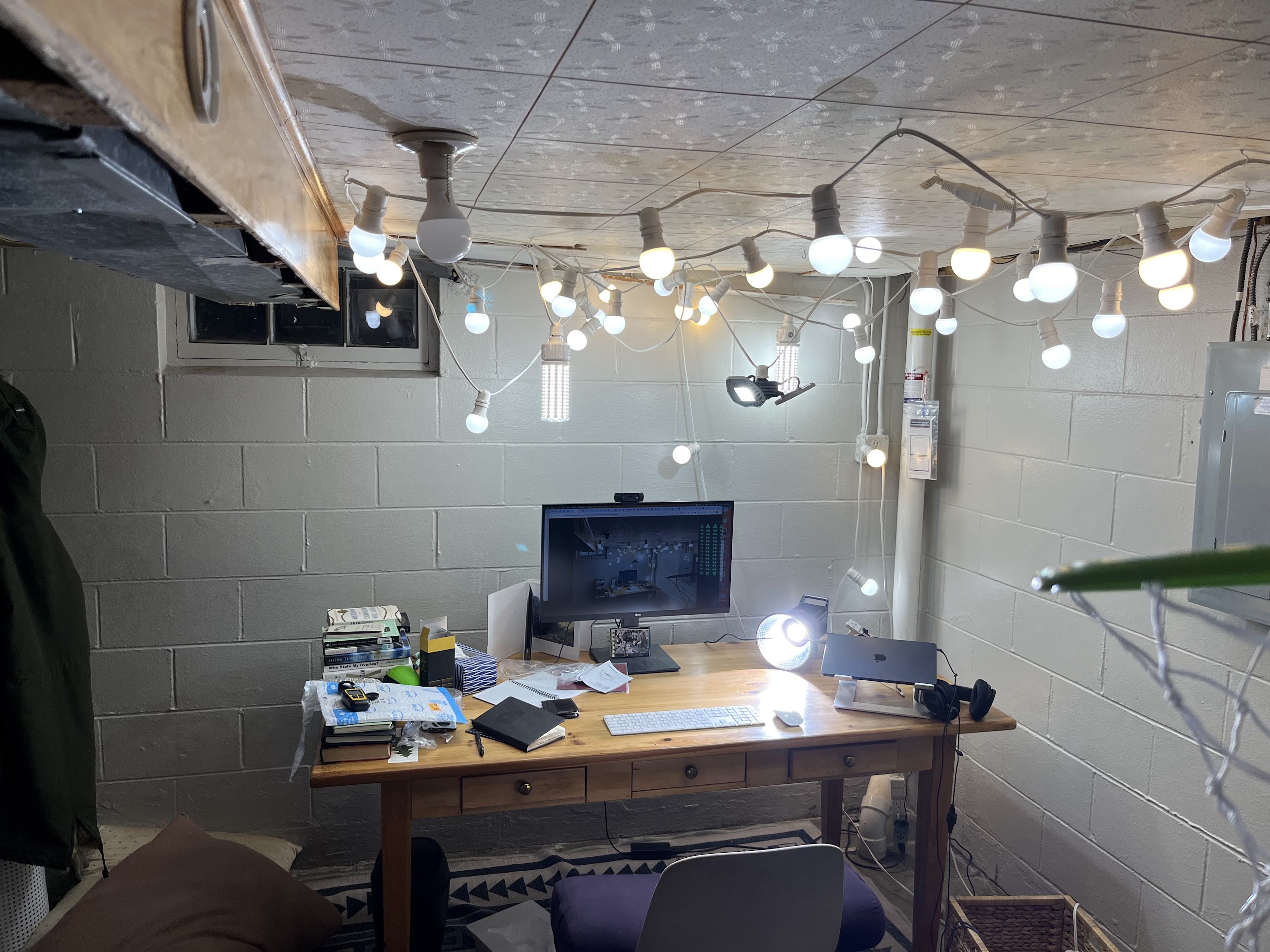
Finally, after turning on 37 standard bulbs, an ultra bright multi pronged LED garage light thing, two ginormous corn cobs, and an industrial strength stage light so intense it’s equipped with it’s own fan, I was able to achieve the equivalent lux of being outside on an overcast winter day in Wisconsin.
I have a new appreciation for just how bright the sun is. If that deep insight is not worth tens of hours of work, hundreds of dollars, and dealing with increasingly desperate pleas from your significant other to not burn the house down, we have different ideas of fun.
Making the bright office more tolerable
The really bright lights can be harsh on the eyes. I decided to sacrifice a bit of lux in favor of making the room much more pleasant to be in.
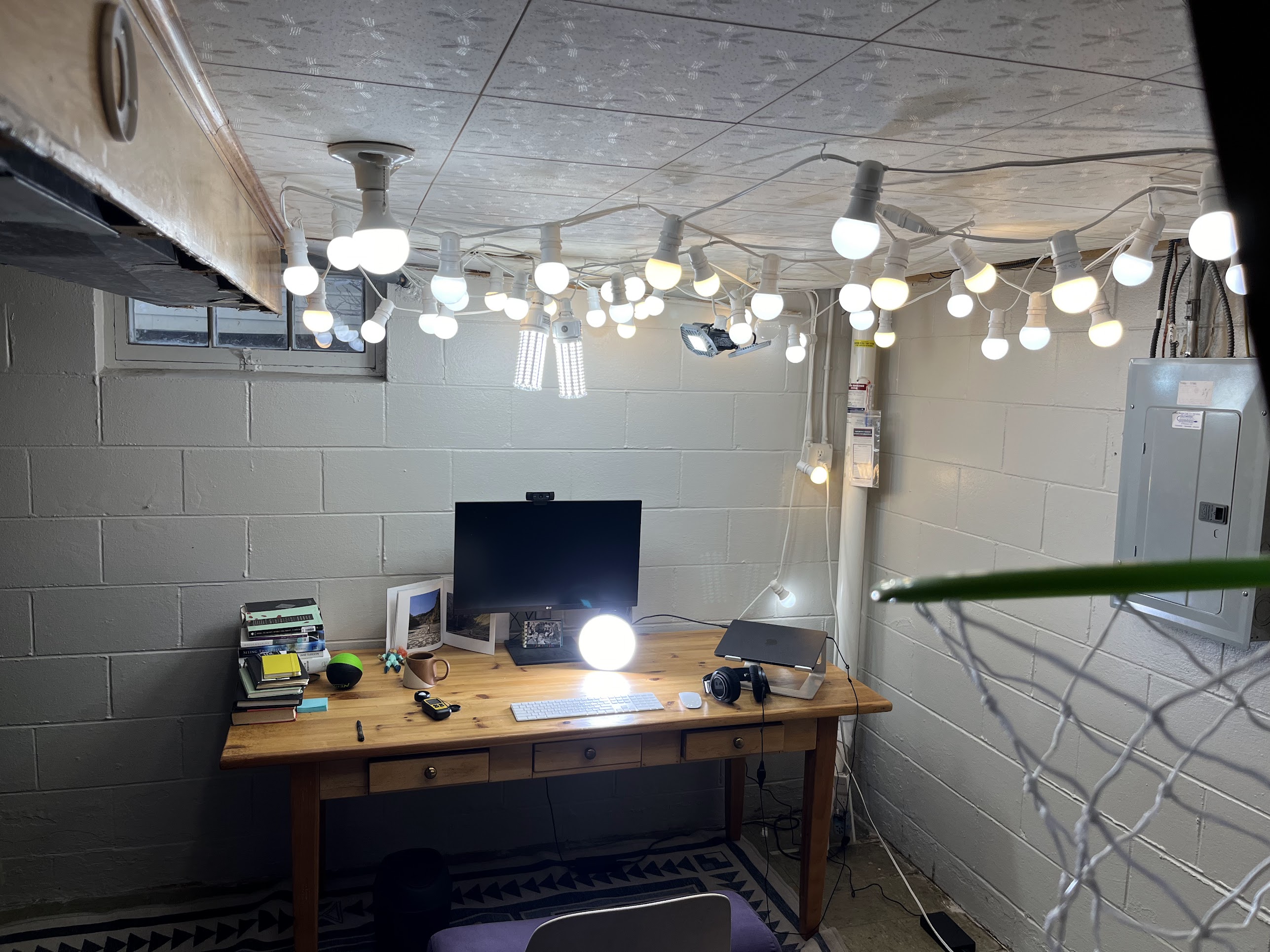
I raised up the corn cobs and the flat panel and purchased a $12 diffuser screen for the Godox. Both these changes reduced the lux count reaching my eyes but made the room much nicer to be in for extended periods of time. The corn cobs are now just barely noticeable at the top of my field of vision while working at my desk.
I then added the rest of my old, small, lumenator 1.0 bulbs back to the ceiling and moved one corn cobs closer to my head. With that, I was able to achieve roughly the same lux at eye level (~11k) as before I made the adjustments and added the diffuser.
I might eventually get a tripod for the Godox, but I’ve spent enough time and money on this project for now.
Is all that bright light bad for your eyes?
I don’t think so, based on some cursory research. You should obviously not stare directly at a bright light source, but I hope that goes without saying. Just a glance at the Godox while turned on to full blast is enough to kick in some deep rooted instincts around not looking at the sun. I will not be messing around with that.
Some people worry about getting too much blue light specifically, being that it can disrupt sleep. The American Academy of Opthamology says that regular blue light exposure is fine. Blue light is also the part of the light spectrum many think is responsible for boosting mood and wakefulness, so the more the merrier in my opinion.
There are studies in rats and mice showing very bright LED light causing macular degeneration. Similar with Albino people. Being that I am neither albino or a rodent, I’m not putting too much stock in those studies for now. It’s something to monitor, though.
When the Godox is on and pointed directly at me I am prone to squinting, which might give me more eye wrinkles or have other downstream effect. But I do my best to let my eyes and face relax, and it gets easier with practice. I can always This is a risk I’m willing to take.
Overall, I like Chapman’s take on the risks from very bright light. This is from the comments section of one of his articles:
Most of the many different theories in it about why LEDs might be bad for you are biologically or physically implausible.
That said, we can’t be absolutely sure there are no bad effects of LED lighting. Not enough research has been done to rule out the possibility. However, it’s unlikely that enough research will ever be done, on this or most other low-probability health risks, so one has to weigh likely benefits vs risks.
For me, the benefits of bright LEDs seem large, and the risks seem small, so it’s an easy choice, but everyone has to make the choice for themselves.
I have become light king, destroyer of SAD
I used to stare enviously out my tiny window, slightly annoyed that I was working in dark basement. Now I look out upon that grey afternoon sky and revel in the fact that I get to live in a world where LEDs are so cheap and good that I can almost literally recreate the sun indoors. It feels great.
The new setup already seems to be lessening the afternoon energy slumps I am prone to. Twice recently I sat down to do some afternoon writing and expected to want a little nicotine gum. I was feeling low energy, and I sometimes like to use a little nicotine when I write regardless. After turning on every light, my energy and mood improved within minutes. Next thing I knew I had written for nearly an hour. I’d periodically look at the package of gum on my desk but not feel it was necessary. Bright light: nature’s nicotine.
As far as usage, I don’t run all the lights every minute I’m working. I’m still experimenting with what works best for me. Going 100% full blast for like an hour in the morning and another hour in the afternoon seems to work well for raising energy levels.
Brightening up my home office hits the middle of my Venn diagram for projects I tend to engage in:
- strong potential for health benefits
- overlooked by most of society, makes me feel cutting edge
- going the DIY route is hard enough to make me feel accomplished but not so hard it requires actual handyman skills
- provides an instant conversation starter when people visit
- affordable to get started, but with plenty of opportunity to drool over all the expensive add-ons that might provide marginal improvements
It helps to have a saintly wife who lets you have fun with this kind of stuff.
I look forward to attributing all future personal and professional success to the lux count I bathe in every day. Maybe Lumenator 3.0 will give me a winter tan as an added bonus.

